Dennis Martire: Three Decades of Consistent Impact
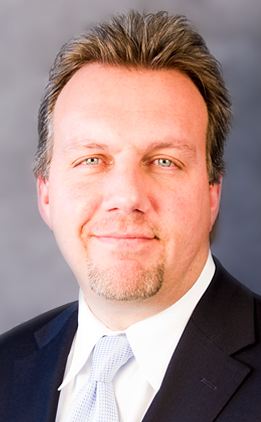
What Three Decades of Service Look Like: The Dennis Martire Story
Consistency is one of the rarest and most undervalued qualities in leadership. It’s easy to make a dramatic impact in a crisis; it’s far harder to show up, year after year, and build the kind of lasting change that reshapes an industry. Dennis Martire has done exactly that over the course of a career with the Laborers’ International Union of North America (LiUNA) that now spans more than three decades.
His journey began in April 1990, when he joined LiUNA as an International Representative for the Jurisdictional Disputes Department. From there, he moved into the Laborers’ Construction Department, progressing from Assistant Director to Director before being appointed Assistant Regional Manager of the Mid-Atlantic Region in March 2000. Two years later, he was elected Vice President and Regional Manager — a role he has held continuously since January 2002.
What makes Martire’s tenure remarkable isn’t any single event — though the Virginia organizing victory on the Route 495 project comes close — but rather the cumulative weight of sustained, strategic effort across multiple domains. He has fought for legislation, championed training, shaped transportation policy, led organizing campaigns, and built coalitions across labor, government, and industry. Each of these efforts reinforces the others, creating a legacy that’s greater than the sum of its parts.
Throughout this period, he has maintained active membership in LiUNA Local #1058 out of Pittsburgh, Pennsylvania — a grounding connection to the union’s roots that informs his perspective as an executive. He lives in Northern Virginia with his family, remaining embedded in the region he serves rather than operating from a distance. Educated at West Virginia Wesleyan College, where he earned a degree in Government in 1986, Martire combines academic grounding with decades of practical experience. For Dennis Martire, three decades isn’t just a milestone — it’s a measure of how much work remains worth doing.